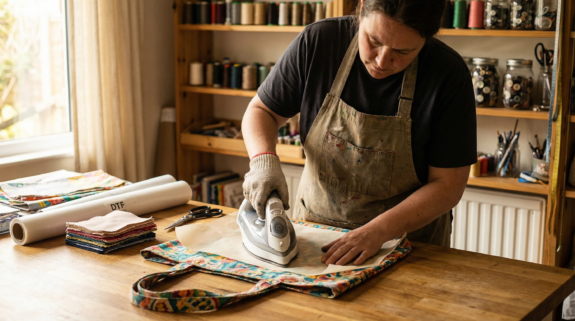
Introduction to DTF Transfers with Threadly Designs
DTF (Direct-to-Film) transfers are revolutionizing home crafting, offering professional-quality custom apparel results without the massive investment of traditional screen printing equipment. You can absolutely make DTF transfers at home using ready-made designs, transforming ordinary garments into personalized masterpieces with just a heat press and some basic supplies.
The beauty of DTF transfers lies in their versatility and accessibility. Unlike vinyl cutting or sublimation printing, DTF works on virtually any fabric type – cotton, polyester, blends, and even dark colors produce vibrant, durable results. Threadly’s DTF Builder Process demonstrates how premium DTF designs for sale can be customized with text, colors, and sizing options to match your creative vision perfectly.
What makes home DTF application particularly appealing is the low barrier to entry. You don’t need specialized printers, inks, or complex chemistry knowledge. Simply purchase pre-printed transfers, position them on your garment, and apply heat and pressure. The result? Professional-looking custom apparel that rivals commercial production quality.
Ready to dive into the world of home DTF transfers? Let’s explore exactly what supplies and equipment you’ll need to get started.
What You’ll Need: Essential Supplies and Equipment
Getting started with the DTF printing process requires specific equipment and materials that work together to create professional-quality transfers. While you can’t print DTF transfers at home without specialized equipment, understanding what’s involved helps you appreciate the complexity behind those custom DTF prints you’ll be ordering.
The essential equipment includes a DTF printer loaded with CMYK+W inks (the white ink creates opacity), special DTF film that accepts the inks properly, and DTF powder adhesive that bonds the design to fabric. You’ll also need a heat press or conveyor dryer for curing the powder, plus a heat press for final application to garments.
Additional supplies include RIP software for print management, proper ventilation systems, and quality control tools like temperature guns. Professional DTF setups require significant investment, which is why many crafters choose to order pre-made transfers instead.
This equipment complexity explains why services like Threadly Designs have become so popular – they handle the technical printing process while you focus on the creative application at home.
Step-by-Step: Creating DTF Transfers at Home
Creating custom DTF transfers at home becomes straightforward once you understand the fundamental process. The journey from design to finished transfer involves three essential phases that work together seamlessly.
Phase 1: Design and Print Preparation Start by designing your artwork in reverse (mirror image) since DTF transfers print backwards. Set your design software to 300 DPI resolution for crisp results. Print your design onto the DTF film using DTF inks, ensuring the printed side faces down when applying.
Phase 2: Powder Application and Curing Immediately after printing, while the ink remains tacky, evenly sprinkle DTF powder across the entire printed area. Shake off excess powder thoroughly to prevent clumping. Cure the powdered transfer in your heat press or oven at 300°F for approximately 2-3 minutes until the powder melts and creates a smooth finish.
Phase 3: Storage and Application Once cooled, your transfers are ready for storage or immediate use. A proper home DTF transfer setup allows you to create multiple transfers efficiently, storing them between parchment paper until you’re ready to apply them to garments using your heat press.
This systematic approach ensures consistent, professional-quality results every time.
How to Design Custom Transfers with Threadly
Creating custom designs through Threadly’s platform streamlines the entire process from concept to DTF ready to press transfers. The platform’s intuitive design builder eliminates the complexity of traditional DTF preparation, making professional-quality transfers accessible to anyone.
Start with high-resolution artwork – ideally 300 DPI PNG files with transparent backgrounds work best. Upload your design directly to Threadly’s builder, where you can adjust sizing, positioning, and preview how your transfer will look on different garment colors. The system automatically optimizes your artwork for DTF printing, ensuring crisp details and vibrant colors.
Design considerations matter significantly for successful transfers. Bold, well-defined graphics translate better than thin lines or small text. Consider how your design will look once applied – colors should contrast well with your intended fabric color. The platform shows real-time previews, helping you make informed decisions before ordering.
Once your design meets your vision, Threadly handles the technical aspects: proper color separation, ink density optimization, and powder application. Your finished transfers arrive ready for your DTF transfer heat press, eliminating guesswork and potential printing failures that plague home DTF setups.
This professional approach ensures consistent results every time, bridging the gap between creative vision and flawless execution.
Applying the Transfer to Fabric: Tips for Best Results
The application phase transforms your carefully prepared design into a permanent, vibrant addition to your fabric. Whether you’ve created transfers using a personal DTF printer or ordered professional prints through Threadly DTF service, the pressing technique determines your final result quality.
Temperature consistency remains crucial throughout the process. Set your heat press to 300-320°F and maintain steady pressure for 15-20 seconds during the initial application. The cold peel technique requires patience—allow the transfer to cool completely before removing the carrier film to prevent adhesive separation.
Fabric preparation significantly impacts adhesion quality. Pre-press your garment for 5-10 seconds to remove moisture and wrinkles, creating an optimal surface for transfer bonding. Cotton and cotton blends typically yield the most reliable results, though poly-cotton blends work well with adjusted temperature settings.
Consider performing a final press after removing the carrier film. This 5-second additional heat application helps seal the edges and enhances durability. Professional application techniques emphasize consistent pressure distribution across the entire design area to prevent partial adhesion failures.
With these fundamentals mastered, you’re ready to explore the creative possibilities that make DTF transfers such a versatile solution for various projects.
Example Scenarios: DTF Transfers in Action
Real-world applications demonstrate the versatility of home DTF printing with Threadly DTF designs. Consider a small business owner creating custom team uniforms: they’d select a logo design from Threadly’s library, customize colors to match brand requirements, then apply the transfer to cotton polo shirts using a standard heat press at 300°F for 15 seconds.
Another practical scenario involves personalizing children’s clothing. Parents frequently choose fun character designs or motivational quotes, applying them to t-shirts, hoodies, or even canvas bags. The key advantage here is the DTF transfer film‘s ability to adhere to various fabric types without cracking or peeling after multiple washes.
Event organizers often leverage DTF transfers for last-minute merchandise needs. Wedding planners particularly benefit from DTF’s quick turnaround capabilities, creating custom favor bags or bridal party shirts within days of an event. The process remains consistent regardless of quantity—whether producing five custom pieces or fifty.
Home crafters appreciate DTF’s precision for intricate designs that would challenge traditional vinyl cutting. Detailed artwork, gradients, and multi-color graphics translate seamlessly through the DTF process, making professional-quality results achievable in any home workspace.
Each scenario reinforces the importance of proper temperature control and timing during application, ensuring long-lasting results that maintain their vibrant appearance through regular use and washing.
Trust and Safety Considerations
When you design your own DTF transfers at home, maintaining safety standards protects both your health and equipment investment. Proper ventilation becomes crucial during the curing process, as DTF powders and adhesives release particles that shouldn’t be inhaled regularly. A dedicated workspace with adequate airflow prevents accumulation of potentially harmful substances.
Heat press safety requires consistent attention to temperature guidelines and protective equipment. Burns from overheated surfaces or steam release during application can occur without proper precautions. Always use heat-resistant gloves and ensure your workspace remains clear of flammable materials.
Quality control extends beyond aesthetics to durability concerns. Poorly applied transfers may separate from fabric during washing, creating choking hazards if small pieces detach from children’s clothing. Testing transfer adhesion through multiple wash cycles before selling or gifting items ensures long-term safety.
Chemical handling protocols matter when working with DTF powders and cleaning solvents. Store materials in sealed containers away from children and pets, and dispose of waste materials according to local regulations. These precautions create a safer environment while maintaining professional results in your home DTF operation.
Limitations and Potential Challenges
While creating DTF fabric transfers at home offers exciting possibilities, several limitations can impact your results and overall experience. Equipment costs represent the most significant barrier, as quality heat presses and proper ventilation systems require substantial upfront investment that may not justify occasional use.
Temperature and pressure consistency pose ongoing challenges for home setups. Unlike commercial equipment, household heat presses often struggle with even heat distribution, potentially causing uneven adhesion or transfer failures. Storage becomes another concern – DTF transfers require controlled humidity environments to prevent premature curing or adhesive degradation.
Design complexity limitations also emerge quickly. Intricate patterns with fine details or multiple colors often exceed home printer capabilities, resulting in pixelated or poorly defined transfers. Color matching proves particularly challenging without professional color management systems.
Time investment shouldn’t be underestimated either. What appears as a simple process actually involves multiple steps – designing, printing, curing, cutting, and application – each requiring patience and precision. Failed transfers mean wasted materials and starting over.
Scale limitations become apparent when producing multiple items, as home equipment typically handles single pieces rather than batch production efficiently. These challenges highlight why many creators find professional DTF services more practical for consistent, high-quality results.
Frequently Asked Questions About Threadly and DTF Transfers
Can I design my own transfers on Threadly’s platform? Absolutely! Threadly’s design builder lets you upload your artwork, add text, and customize colors directly on their platform. You can preview how your design will look on different garments before placing your order.
What is needed for DTF transfers application at home? You’ll need a heat press or household iron, the DTF transfer sheets, your chosen garments, and parchment paper for protection. The application process requires specific temperature settings (typically 300-320°F) and pressure for 10-15 seconds.
How long do Threadly’s DTF transfers last? With proper application and care, quality DTF transfers maintain their vibrancy through 50+ wash cycles. The key is following proper application temperatures and washing garments inside-out in cold water.
Can DTF transfers work on any fabric type? DTF transfers work exceptionally well on cotton, polyester, and cotton blends. They’re particularly effective on dark fabrics where vinyl might struggle, making them versatile for various garment types.
What’s the minimum order quantity with Threadly? Threadly accommodates both small and large orders, making it accessible for personal projects or business ventures. Their DTF printing guide outlines specific quantity options and pricing tiers.
This flexibility makes DTF transfers an attractive option whether you’re creating single custom pieces or launching a full apparel line.
Key Make DTF Transfers At Home Takeaways
Creating DTF transfers at home with Threadly designs offers an accessible entry point into custom apparel printing. The key to success lies in understanding that while the printing process requires specialized equipment, the application phase can be mastered with basic tools like a heat press or household iron.
Essential considerations for home DTF success include:
Ensuring your chosen file type for DTF transfer meets quality requirements (PNG with transparent backgrounds work best)
Maintaining proper temperature and pressure during application (typically 320°F for 15-20 seconds)
Starting with simple designs before attempting complex, multi-color artwork
Budgeting for quality materials that directly impact transfer durability
The combination of Threadly’s professional printing services with home application creates a cost-effective middle ground between full DIY setups and complete outsourcing. While equipment investments and learning curves present initial challenges, the creative freedom and potential savings make this approach particularly appealing for small businesses and hobbyists.
Whether you’re testing design concepts or launching a custom apparel venture, DTF transfers provide the flexibility to bring your creative visions to life without the overhead of traditional screen printing methods.